

Quick answer
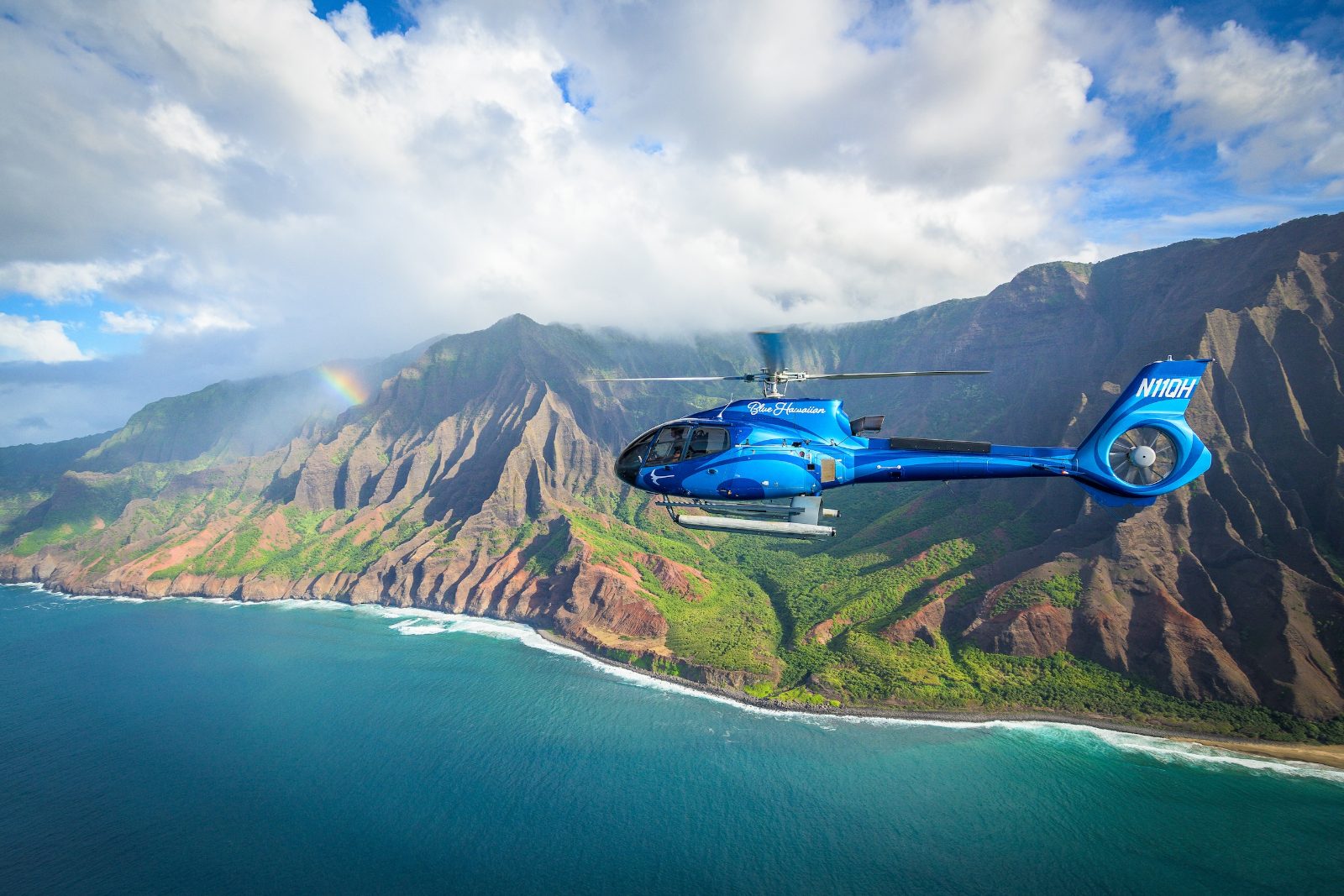
Most Kauai helicopter tour operators enforce a per-passenger weight limit of 240 to 300 pounds, with total aircraft weight restrictions dictating seat assignments. Passengers exceeding the individual limit may be required to purchase an additional seat, while those near the threshold are often paired strategically to maintain safe center-of-gravity balance. Weight policies vary by aircraft type—smaller four-seat helicopters have tighter restrictions than six-seat models used for Na Pali Coast and Waimea Canyon routes.
Helicopter weight limits on Kauai are determined by Federal Aviation Administration certification for each aircraft model, not by operator preference. A typical six-seat touring helicopter such as the Airbus AS350 or Bell 407 carries a maximum gross weight between 4,500 and 5,250 pounds, which includes fuel, pilot, passengers, and safety equipment. After accounting for a full fuel load and the pilot, roughly 1,200 to 1,400 pounds remain for passenger weight, making balance as critical as total mass. Operators calculate weight distribution across the cabin to keep the aircraft within its certified center-of-gravity envelope. A passenger weighing 250 pounds may be seated next to a lighter traveler to offset the load, while heavier groups might be split across separate flights. Doors-off tours impose stricter limits because the open configuration shifts aerodynamic forces and requires tighter weight discipline. The 240-to-300-pound per-seat threshold reflects both structural limits and the practical need to pair passengers without exceeding lateral balance margins. Weight restrictions intersect with seating preferences in ways that catch first-time fliers off guard. Front-row seats, prized for unobstructed views of the Na Pali cliffs and Manawaiopuna Falls, are often reserved for passengers whose weight allows the pilot to maintain proper pitch trim. Operators ask for accurate weight information at booking because last-minute adjustments at the heliport can delay departures or force rebooking. Some companies weigh all passengers before flight, a standard safety protocol that eliminates guesswork and ensures compliance with the aircraft's operating manual. The kauai helicopter tours weight limit is not negotiable, but transparency during booking prevents complications. If your party includes passengers near or above the threshold, contact the operator directly rather than relying on online forms. Many companies accommodate heavier travelers by assigning them to larger aircraft or scheduling flights with lighter passenger loads, but these arrangements require advance coordination and may carry premium pricing.
“Weight distribution across the cabin keeps the aircraft within its certified center-of-gravity envelope, making balance as critical as total passenger mass.”
Kauai Helicopter Tours Weight Limit and Pre-Flight Requirements
Helicopter operators enforce strict weight limits for flight safety, and accurate information at booking is essential.
-
Provide accurate body weight at booking — Operators use individual weights to calculate safe passenger distribution and fuel load.
-
Confirm per-passenger weight limit with your operator — Most Kauai operators set limits between 240–300 pounds per passenger.
-
Check total group weight restrictions — Combined passenger weight may not exceed aircraft-specific maximums, typically 500–600 pounds for smaller aircraft.
-
Wear lightweight clothing on flight day — Heavy jackets, boots, or gear add to your measured weight and may affect seating assignments.
-
Arrive early for weight verification — Operators weigh passengers before boarding to confirm safe loading and balance.
-
Understand that weight policies are non-negotiable — Exceeding limits results in denied boarding for safety reasons, with no refund for inaccurate information.
Common Mistakes Regarding Kauai Helicopter Tours Weight Limit Policies
Weight-related issues remain the most common reason passengers are denied boarding or face last-minute seat reassignments. Providing inaccurate weight information during booking creates operational and safety complications that operators cannot overlook.
Underreporting passenger weight at booking
Operators weigh passengers at check-in, and discrepancies beyond tolerance limits may result in denied boarding or require purchasing an additional seat if aircraft balance cannot be maintained with the reported configuration.
Assuming weight limits are suggestions rather than safety requirements
Federal aviation regulations mandate strict weight and balance calculations for every flight. Exceeding limits forces the operator to refuse boarding or redistribute passengers across multiple aircraft.
Booking without checking combined passenger and luggage weight
Total weight includes your body weight plus any cameras, bags, or gear you carry onboard. If the combined figure exceeds per-seat limits, you may be asked to leave items behind or rebook.
Arriving without advance disclosure of weight over 240-275 lbs
Most operators set per-seat maximums in this range and require advance notice for heavier passengers to arrange appropriate seating or aircraft. Surprise disclosure at check-in often results in flight denial with no refund.
Best Time to Fly and Impact of Weather on Kauai Helicopter Tours Weight Limit Constraints
The best arrival window is 07:00–10:00, as clearer morning skies typically provide better visibility and smoother flight conditions. Stable morning air allows for optimal aircraft performance and precise weight distribution management for safety.
Winter (Dec–Feb)
ModerateOccasional rain, 70–78°F
Higher cloud ceilings may cause cancellations; mornings are most stable.
Spring (Mar–May)
ModerateMild conditions, 72–80°F
Ideal visibility allows for consistent flight operations and weight management.
Summer (Jun–Aug)
HighWarm and dry, 75–85°F
Higher temperatures can affect engine performance and load capacity limits.
Fall (Sep–Nov)
ModerateLower humidity, 73–82°F
Predictable weather patterns support reliable morning departure schedules.
Verdict: The best time to fly is between 07:00 and 10:00 during the months of April or October to take advantage of stable weather and optimal aircraft performance.
Operating Hours for Kauai Helicopter Tours at Lihue Airport
Helicopter tours departing from Lihue Airport operate daily throughout the week. The scheduling remains consistent to accommodate visitors throughout the year.
| Monday | 07:00–16:00 | |
|---|---|---|
| Tuesday | 07:00–16:00 | |
| Wednesday | 07:00–16:00 | |
| Thursday | 07:00–16:00 | |
| Friday | 07:00–16:00 | |
| Saturday | 07:00–16:00 | |
| Sunday | 07:00–16:00 |
Arrival Information for Kauai Helicopter Tours at Lihue Airport
Most helicopter tours operate from the commuter terminal area at Lihue Airport, located off Ahukini Road. The most efficient approach is by car or taxi, providing direct access to the hangar facilities where operators are based.
Rental car via Ahukini Road to Lihue Airport
Direct service to Lihue Airport Heliport area
Not recommended due to airport traffic and distances between terminals
Check availability
Frequently asked questions about kauai helicopter tours weight limit
Everything you need to know about kauai helicopter tours weight limit